Notes from the vertical drama studio
Stories, strategies, and signal
for the next era of vertical drama.
Designing Vertical Stories That Don't Feel Vertical
 By SceneWeaver Team•8 min read
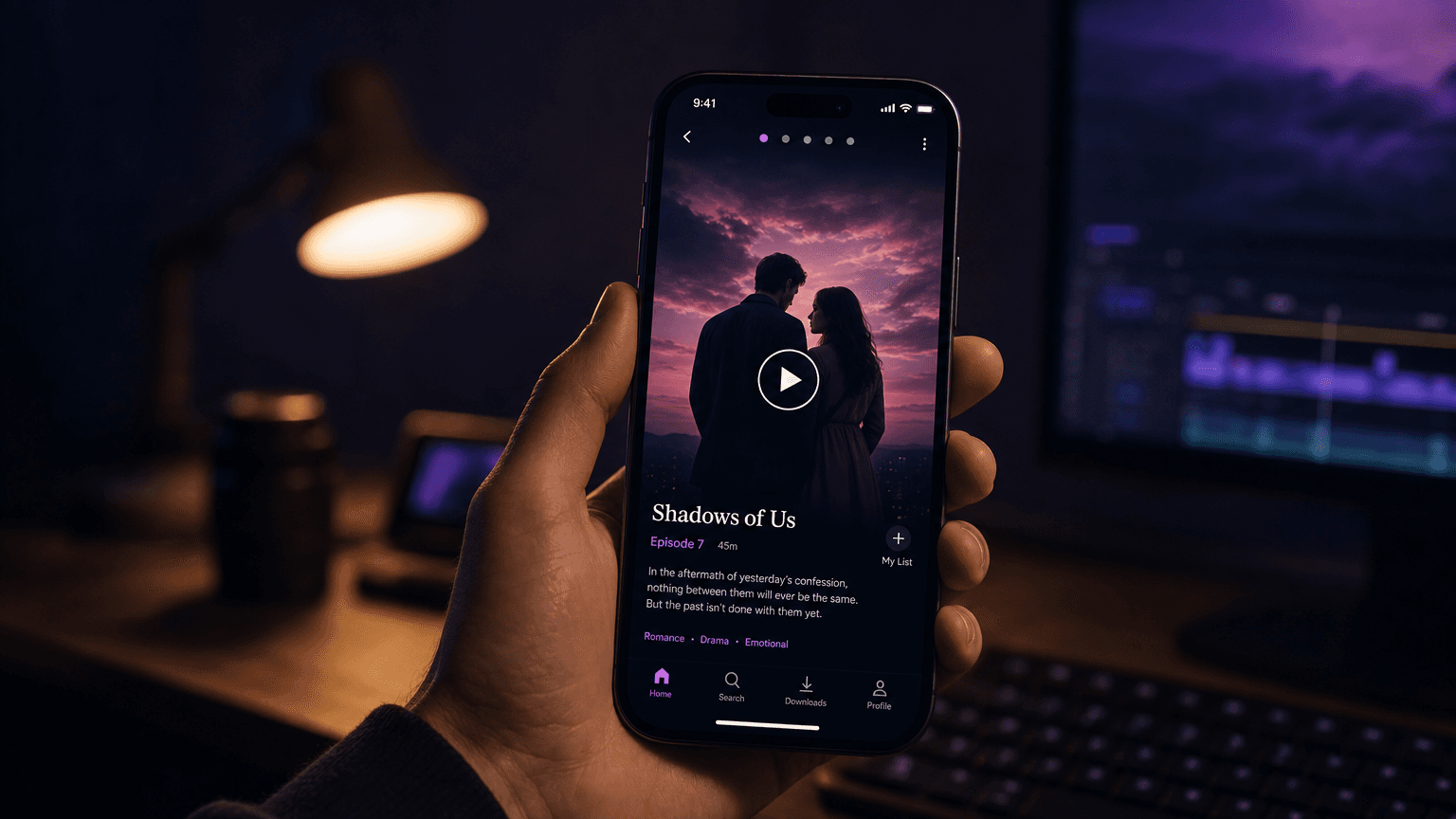 Product
See SceneWeaver in two minutes
One show, start to finish: premise to screenplay to cast, stills, the timeline cut, and a published episode on the Watch feed — in a 90-second walkthrough of the real interface.
SceneWeaver Team·2 min read Product
The library just grew by 355 items
We expanded the cast, wardrobe, locations, props, vehicles, and styles libraries — and added topic filters so you can actually find things.
SceneWeaver Team·1 min read Product
Introducing image-to-video — and 3-shot coverage
Every still you generate can now become a 5-second motion clip. With three variants per shot, you get coverage choices the cut deserves.
SceneWeaver Team·1 min read Product
Credits and the real cost of a show
A breakdown of how many credits it takes to ship an 8-shot episode — stills, narration, video coverage, and the final render.
SceneWeaver Team·1 min read Product
Why we chose Firestore for the production pipeline
Most micro-drama tools sit on Postgres + an ORM. We're on Firestore. Here's why — and where we'd push back if we did it again.
SceneWeaver Team·1 min readProductVertical drama pacing — the 90-second shape
Micro-dramas live or die in the first 90 seconds. Here's the beat structure that works across ReelShort, DramaBox, and the TikTok-native short-form world.
SceneWeaver Team·1 min readProductMastering the Kubrick Look
Stanley Kubrick's signature is one-point perspective, clinical light, and the unmistakable 'stare.' Here's how to replicate it with SceneWeaver's shot generator.
Sarah Connor·1 min read7 articles